Kamloops summers don't ease in gently. One week it's 18°C and pleasant, and the next week the valley is locked at 38°C and you're pouring sweat in stop-and-go traffic on Columbia Street. If your AC isn't ready, you'll find out fast — and usually at the worst possible time.
The good news is that almost every AC issue gives you warning signs well before it fails completely. If you catch them in April or early May, the fix is usually cheap and quick. Wait until July, and you're sitting in a hot vehicle with the repair shop booked two weeks out.
Why Vehicle AC Systems Struggle in Kamloops
Your AC works harder here than in most of Canada. A few reasons:
- The valley traps heat. Kamloops sits in a desert valley with little airflow on still summer days. Cabin temperatures inside parked vehicles regularly hit 55–60°C, and your AC has to claw all of that back down to comfortable.
- Long highway runs. The Coquihalla, the connector to Kelowna, the run up to Sun Peaks — they all involve long stretches at highway speed in full sun, which works the AC continuously.
- Smoky air. Wildfire season puts extra demand on the AC because it's not just cooling, it's also helping pull particulates out of the cabin through the recirculation cycle.
That means small problems — a slow refrigerant leak, a tired compressor clutch, a dirty cabin filter — show up earlier and more severely here than they would in a milder climate.
1. The Air Isn't As Cold As It Used to Be
This is the most common complaint. The AC is still blowing cold-ish air, but not the icy blast you remember from a year ago. The most common cause is low refrigerant — and refrigerant doesn't get "used up." If you're low, you have a leak somewhere in the system.
Topping up a low system without finding the leak is a band-aid that lasts a few weeks at best. A proper AC service includes leak detection (usually with UV dye or a sniffer), repair of the leak, evacuation of the system, and refill to the manufacturer's spec. It's not the cheapest service, but it's the only one that actually fixes the problem.
2. Weak Airflow Even on Max
If the temperature is fine but the volume of air coming out is weak, the issue is usually airflow rather than the AC system itself. The two most common culprits:
- A clogged cabin air filter. Easiest fix on the list. Most filters live behind the glove box, take about five minutes to swap, and a dirty one chokes off airflow dramatically.
- A failing blower motor. If the filter is fresh and airflow is still weak, the motor itself may be wearing out. You'll often hear it before it fails completely — slow start-up, intermittent operation, or a buzzing sound.
3. Strange Smells When the AC Kicks On
Musty or mildewy smells are the most common — that's bacteria and mould growing on the damp evaporator coil, often because the cabin filter is overdue or the drain has gotten clogged. The fix is usually a filter swap and an evaporator cleaning treatment.
A sweet, syrupy smell can mean a coolant leak into the cabin from a failing heater core — that's a more serious issue and worth diagnosing quickly. A burning smell usually points to an electrical problem (blower motor or compressor clutch) and the system should be checked before you keep running it.
4. Noises You Didn't Used to Hear
Switch on the AC and listen. A healthy system makes the compressor clutch engage with a small click and the blower motor hums quietly. Things to listen for that aren't normal:
- Loud clicking or grinding when the AC engages — usually a failing compressor clutch.
- Squealing on engagement — often a worn or loose drive belt.
- Hissing from the dash — sometimes a sign of low refrigerant or a vacuum leak in the HVAC controls.
- Rattling from under the hood — could be a failing compressor or a loose component nearby.
Kamloops tip: If your AC has felt borderline for the last few weeks of summer driving last year, don't assume it'll be fine this year. Refrigerant leaks usually get worse with each season, and the cost goes up if a leak damages the compressor.
5. The AC Cycles On and Off Constantly
You can hear the compressor engage and disengage in rapid succession, and the cooling is inconsistent. This is often a sign of low refrigerant — the system pressure isn't where it should be, and the safety pressure switch is forcing the compressor to cycle off to protect itself. It can also indicate a failing pressure switch or expansion valve. Either way, it's not something to ignore — short-cycling shortens compressor life.
6. The AC Works Better at Highway Speed Than Idling
If the AC blows cold while driving but warms up at stoplights, the most common cause is a failing cooling fan. The condenser (the radiator-looking part in front of your engine radiator) needs airflow to reject heat. At highway speed there's plenty of air moving through it; at idle, the fan has to do all the work. If the fan is slow or failing, your AC suffers most when you need it most — sitting in summer traffic.
What a Proper AC Check Includes
A complete AC service at CRU-Tech goes through:
- Performance test (vent temperature at idle and at speed)
- Visual inspection of belts, hoses, condenser, and compressor
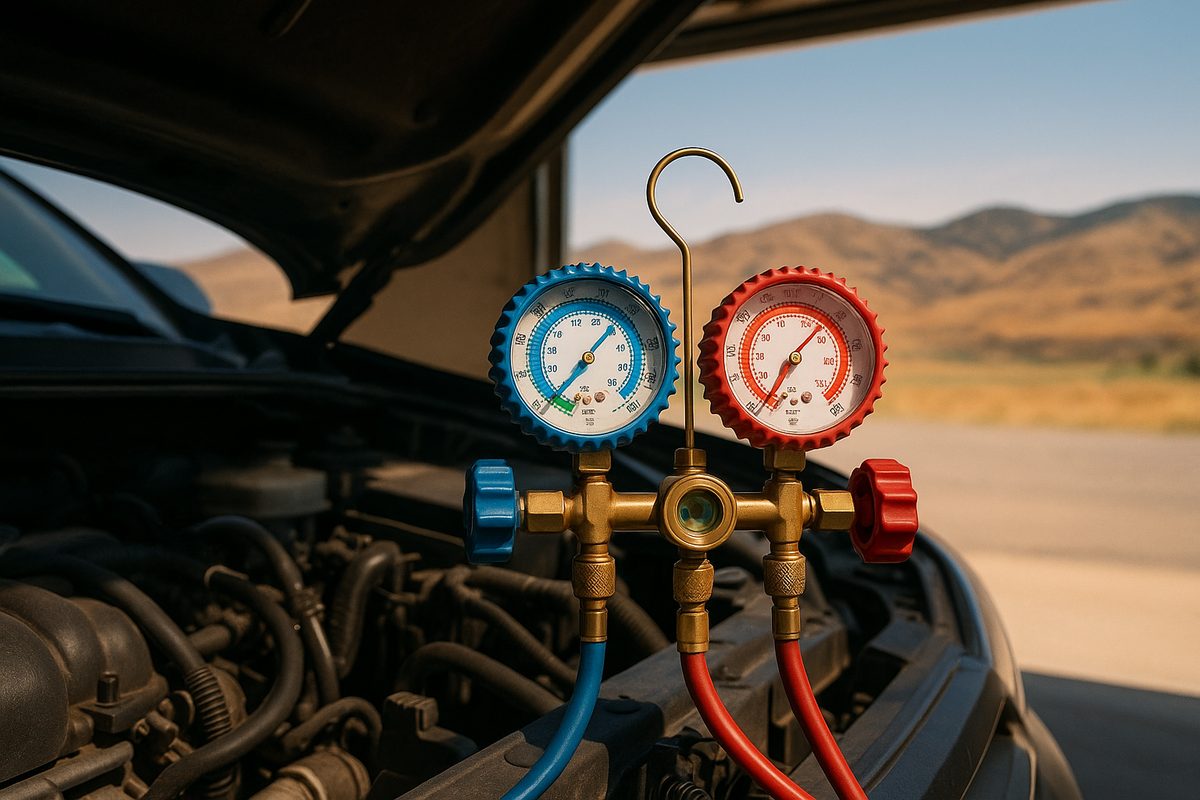
- System pressure check on both high and low sides
- Leak detection with UV dye or electronic sniffer if needed
- Cabin filter inspection
- Refrigerant evacuation and recharge to spec if required
A basic check takes about 30–45 minutes. If everything is healthy, you walk out knowing the system will hold up through the worst of summer. If there's a problem, we'll tell you what it is, what it costs to fix, and what happens if you don't.
Book early: AC service appointments fill up fast once the first 35°C day hits. Booking in April or early May means you can get in quickly and have time to deal with anything before the heatwave.
When to Book
If you're noticing any of the signs above — weak cold air, weak airflow, smells, noises, or short-cycling — book sooner rather than later. AC repairs tend to compound: a small refrigerant leak that costs a couple hundred to fix in April can damage the compressor by July and end up being a four-figure repair.
If everything seems fine, but it's been more than two years since your last AC service, it's still worth a check. Refrigerant leaks are often slow enough that you don't notice the gradual loss of cooling until you really need it.
Beat the Heat Before It Arrives
Book an AC inspection at CRU-Tech Auto and roll into summer with cold air on demand.