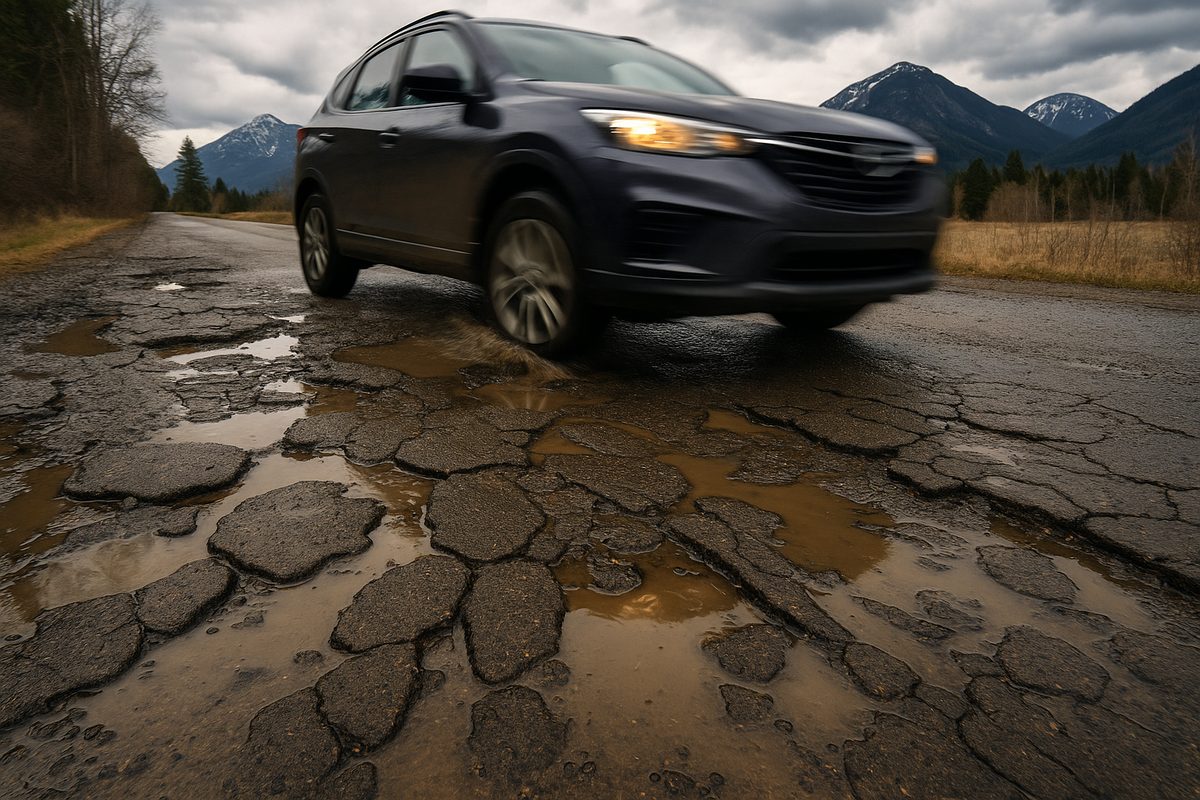
Every Kamloops driver knows the feeling: you're rolling down a familiar street, and suddenly there's a jarring bang as a wheel drops into a pothole you didn't see in time. You wince, glance in the mirror, and keep driving — and most of the time, nothing seems wrong.
But "nothing seems wrong" and "nothing is wrong" aren't the same thing. Pothole impacts are one of the most common causes of suspension and alignment damage, and the effects often build up quietly over weeks before you notice them.
Why Kamloops Gets So Many Potholes
Potholes are a freeze-thaw problem, and Kamloops has the perfect climate to produce them. Through late winter and early spring, daytime temperatures climb above freezing and nighttime temperatures drop back below it — sometimes cycling like that every single day for weeks.
Here's what happens: water seeps into small cracks in the asphalt. At night it freezes and expands, widening the crack. During the day it thaws. Repeat that cycle dozens of times and the pavement weakens, then breaks apart under traffic. By April, streets that were smooth in November are an obstacle course — and the roads around Kamloops, with their mix of older pavement and heavy seasonal temperature swings, get hit hard.
What a Pothole Actually Does to Your Vehicle
When a wheel drops into a pothole at speed, the impact has to go somewhere. It travels up through the tire, the wheel, and into the suspension. Depending on the size of the hole and your speed, that single impact can cause:
- Knocked alignment. The most common result. The impact shifts suspension components just enough to throw off your wheel angles.
- Bent wheels. Alloy wheels especially can bend or crack on a hard hit, causing vibration and slow air leaks.
- Tire damage. Sidewall bulges, internal belt separation, or an immediate blowout.
- Damaged shocks or struts. A hard enough hit can dent or bend a strut, or blow a seal so it starts leaking.
- Bent or broken suspension components. Control arms, tie rods, and ball joints can all be damaged or knocked out of spec.
Warning Sign 1: The Car Pulls to One Side
If your vehicle drifts left or right when you let go of the wheel on a straight, flat road, your alignment is off. After a pothole hit, this is the single most common symptom. Driving on a bad alignment isn't just annoying — it wears your tires unevenly and quickly. A set of tires that should last 60,000 km can be ruined in a few thousand if the alignment is bad enough.
Kamloops tip: If you've hit a bad pothole and then notice uneven tire wear or a pull, get the alignment checked sooner rather than later. An alignment is far cheaper than a new set of tires — and a bad alignment will destroy tires fast.
Warning Sign 2: A New Vibration
A steering wheel or seat vibration that wasn't there before — especially one that gets worse at certain speeds — often points to a bent wheel or a tire damaged by a pothole. It can also mean a wheel weight was knocked off and the wheel is now out of balance. Either way, it's worth having checked; a bent wheel can leak air slowly and is a safety concern at highway speed.
Warning Sign 3: Uneven or Bouncy Ride
Your shocks and struts are what keep the tires planted on the road and the ride controlled. If a pothole has damaged one, you may notice:
- The vehicle continues to bounce after going over a bump, instead of settling quickly
- The nose dives noticeably when you brake hard
- The body leans more than usual in corners
- A "clunk" over bumps that wasn't there before
Worn or damaged shocks lengthen your braking distance and reduce control — not something to ignore on Kamloops' hilly streets.
Warning Sign 4: Steering Feels Loose or Off-Centre
If the steering wheel is no longer centred when you're driving straight, or the steering feels loose, wandering, or vague, a pothole may have knocked a tie rod or other steering component out of spec. Steering issues should always be checked promptly — they affect your direct control of the vehicle.
Warning Sign 5: Visible Damage
It's worth a quick look after a hard hit. Walk around the vehicle and check for:
- Bulges, cuts, or scrapes on the tire sidewalls
- Dents or cracks on the wheel rims
- A wheel that visibly sits at a different angle than its pair on the other side
- Fresh fluid leaks near the wheels (a sign of a blown strut seal)
What to Do Right After Hitting a Bad Pothole
If you hit a pothole hard, here's a sensible approach:
- Don't panic-brake on the spot. If it's safe, find a place to pull over and look the vehicle over.
- Check the tires and wheels for obvious damage and a soft tire.
- Pay attention as you drive on — note any new pull, vibration, or noise.
- Book an inspection if anything feels different. Even if it seems fine, a quick alignment check is cheap insurance after a hard hit.
Good to know: The City of Kamloops accepts pothole reports, and if a pothole damages your vehicle you may be able to file a claim with the city. Document the location, take photos, and keep your repair invoice.
How CRU-Tech Can Help
A post-pothole inspection at CRU-Tech covers the whole picture: we check alignment, inspect wheels and tires for damage, look over the shocks and struts, and examine the steering and suspension components for anything bent, loose, or leaking. If something needs attention, we'll explain what it is and what it costs — and if everything checks out, you drive away knowing it.
Spring is the right time for this. The potholes are at their worst, you've likely already taken a few hits, and getting the alignment and suspension sorted now means your tires last longer and your vehicle drives the way it should all summer.
Hit a Pothole That Worried You?
Book a suspension and alignment check at CRU-Tech Auto. We'll find out if there's damage before it costs you a set of tires.