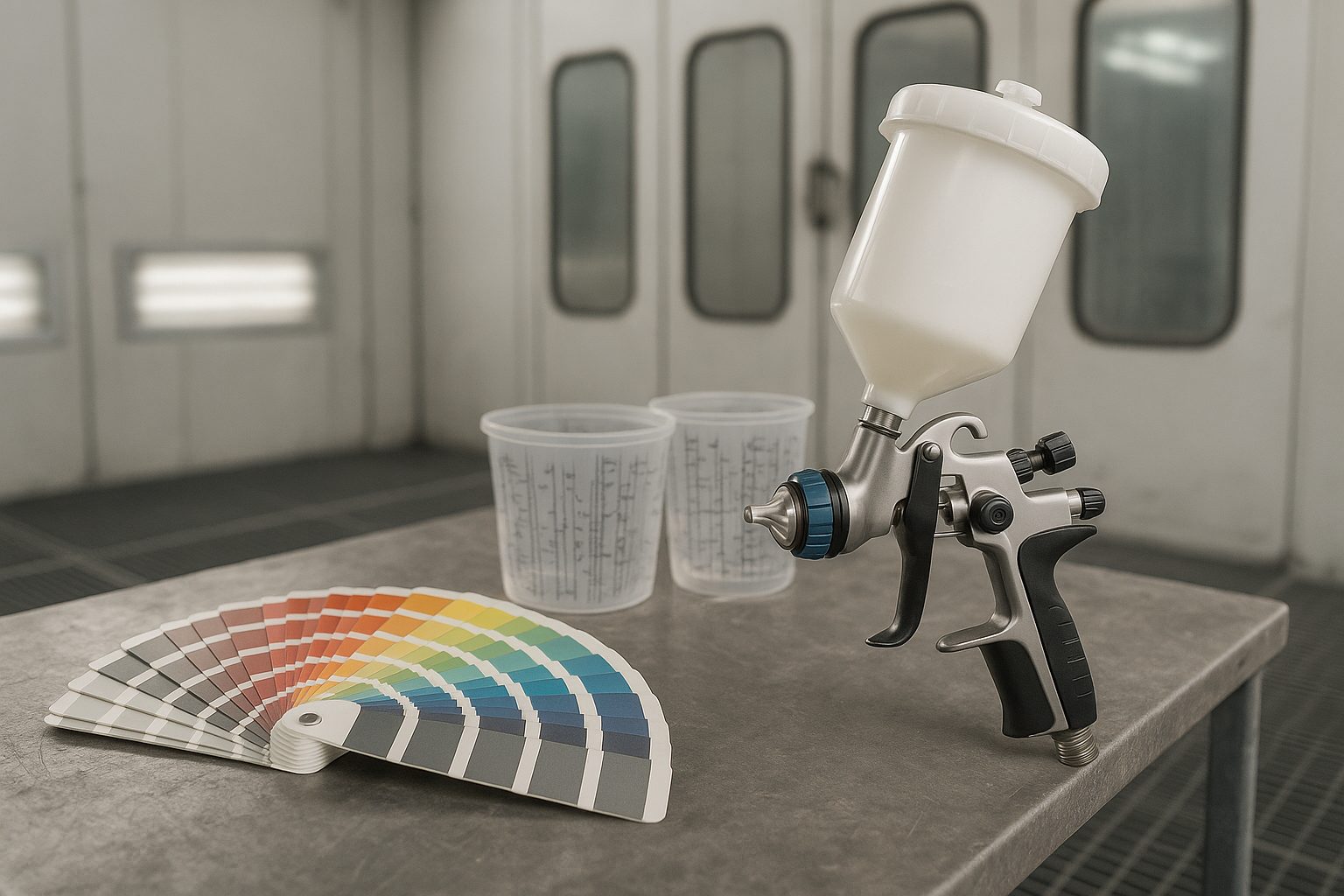
One of the most common concerns we hear from customers bringing in a vehicle for collision or paint repair is: "Will the colour match?" It's a fair concern — nobody wants to drive away with a patch that looks like a different shade than the rest of the vehicle. Here's how modern paint matching technology works, and why a professional repair should be virtually invisible.
The Challenge: No Two Vehicles Are Exactly the Same
Here's something most drivers don't know: even two vehicles of the same make, model, year, and listed colour code can have slightly different paint shades. Paint mixed by the manufacturer varies slightly from batch to batch. Exposure to sun, weather, and time causes paint to oxidize and shift in tone. So "matching the factory colour code" alone isn't sufficient — a good painter has to match your specific vehicle as it is today.
Spectrophotometers: The Colour-Reading Tool
The heart of modern paint matching is the spectrophotometer — a handheld device that reads the precise colour of your vehicle's existing paint by measuring how light reflects off the surface. It captures the colour data across the full spectrum and compares it against a database of thousands of paint formulas.
The device takes multiple readings from different angles (because metallic and pearl paints look different at different angles) and generates a formula recommendation. This is far more precise than trying to match colour visually under shop lighting.
Computer Mixing and Formula Adjustment
Once the spectrophotometer identifies the closest base formula, the paint is mixed by computer-controlled dispensing equipment that measures each tint and component to fractions of a gram. The resulting mix is then sprayed onto a test panel and allowed to dry.
Here's where skilled technique matters: the test panel is compared to the actual vehicle under controlled lighting. If the match needs refinement, the painter adjusts the formula — adding a tinting agent, adjusting the metallic content, or modifying the base ratio until the panel matches as closely as possible. This adjustment process can take multiple iterations for complex metallic or pearl finishes.
Feathering and Blending
Even a perfect colour match can look off if applied incorrectly. Professional painters use blending techniques — gradually feathering the new paint into adjacent panels so there's no hard edge where new paint meets old. On metallic colours especially, the angle and technique of application affects the final appearance significantly. This is why collision repair paint work should always be done by trained, experienced painters.
At CRU-Tech: We use professional spectrophotometer technology and computerized paint mixing to ensure the most accurate match possible. Our painters have years of experience in colour blending and finishing — delivering results that are virtually indistinguishable from factory paint.
Clear Coat and Finishing
After the colour coat, a clear coat is applied. This is the protective layer that gives modern automotive paint its depth and gloss. The clear coat also needs to be properly blended to the surrounding area to avoid a visible sheen difference. After curing, the repaired area is polished to bring up the gloss and match the surrounding paint's finish level.
When to Expect a Perfect Match vs. a Very Good Match
In most cases, a professional colour match will be indistinguishable to the naked eye in normal lighting. On older vehicles (10+ years) with significant paint fade, or on certain difficult metallic and candy colours, there may be a very slight variation visible only under specific lighting angles. A reputable shop will tell you upfront if a perfect match may be challenging, and discuss your options (such as blending into adjacent panels for a seamless result).
Bring your vehicle into CRU-Tech for a paint repair assessment. We'll give you an honest overview of what to expect and deliver the highest quality finish our team is known for.
Ready to Book an Appointment?
Our team at CRU-Tech Auto is here to help. Give us a call or send us a message.