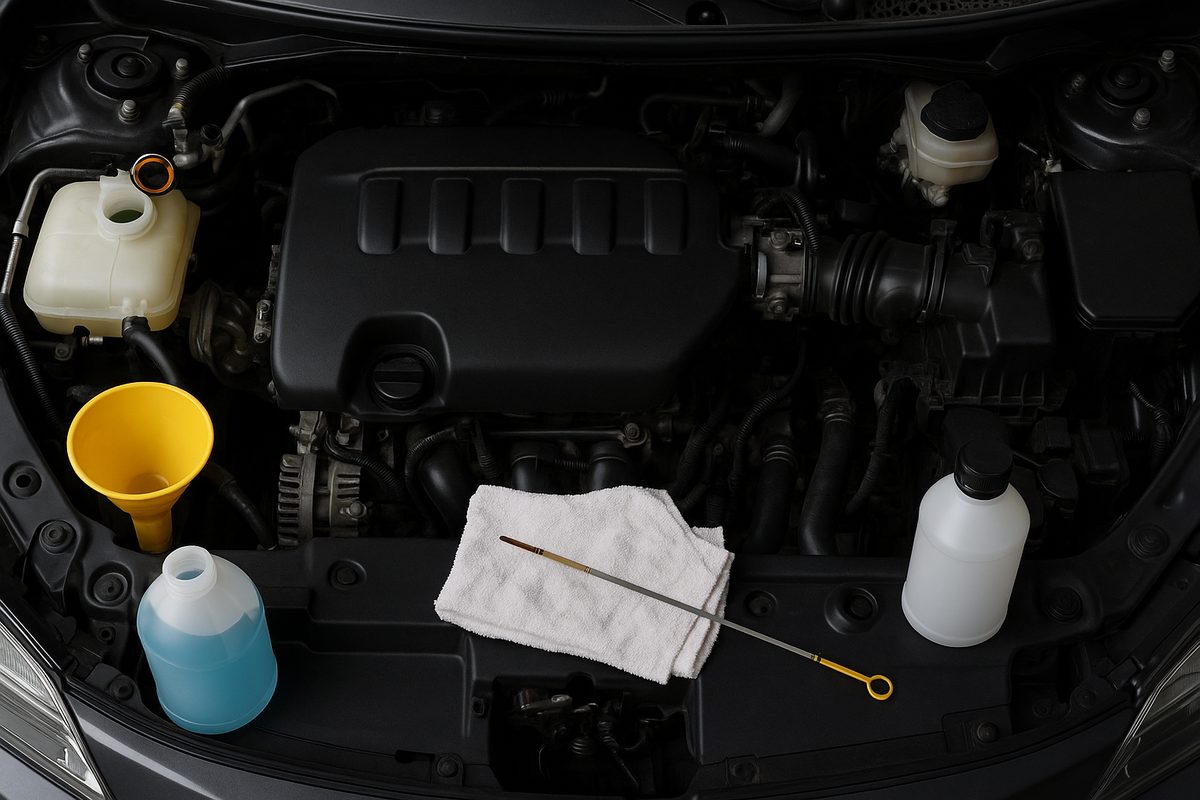
Winter in Kamloops is tough on vehicles. Freezing temperatures, salty roads, and cold starts all take a toll — and your fluids absorb a lot of that punishment quietly in the background. By the time spring arrives, several critical fluids may be degraded, low, or contaminated without showing any obvious warning signs. Here are the five fluid checks every Kamloops driver should make before summer heat adds even more stress to the system.
1. Engine Coolant (Antifreeze)
Coolant does double duty: it keeps your engine from freezing in winter and from overheating in summer. Over time, coolant degrades and becomes acidic, which corrodes hoses, the radiator, and the water pump from the inside. After a hard winter, it's worth checking both the level and the condition of your coolant.
A quick visual check in the overflow reservoir will tell you if you're low. Coolant that's brown or murky instead of bright green, orange, or pink has broken down and should be flushed and replaced. Running degraded coolant into Kamloops' hot summers is a recipe for overheating.
Kamloops tip: Summer temperatures in the Thompson Valley regularly hit 35–40°C. A healthy cooling system isn't optional — have your coolant tested if it's been more than two years since your last flush.
2. Brake Fluid
Brake fluid is hygroscopic — it absorbs moisture from the air over time. As water content increases, the fluid's boiling point drops, which can cause brake fade under heavy use. Hard winter braking (think stopping on icy descents around Kamloops) accelerates this process.
Check that the brake fluid reservoir is between the MIN and MAX marks. More importantly, if your fluid looks dark or brown rather than clear to light amber, it's time for a flush. Most manufacturers recommend replacing brake fluid every two years regardless of how it looks.
3. Transmission Fluid
Transmission fluid lubricates and cools the transmission. In cold weather, it thickens, which puts extra strain on transmission components during those first few cold starts. Over time — especially if your vehicle has higher mileage — that repeated cold-thickening and heat cycling breaks the fluid down.
Healthy transmission fluid is typically red or pink and has a slightly sweet smell. Dark brown or black fluid with a burnt odour is a warning sign. If you can't remember the last time your transmission fluid was changed, spring is a good time to have it inspected.
4. Power Steering Fluid
If you have a hydraulic power steering system (rather than electric), the fluid that powers it can degrade and pick up contaminants over time. Low or dirty power steering fluid can cause stiff, unresponsive steering — not something you want to discover on a winding BC Interior highway.
Check the reservoir when the engine is cold. The fluid should be at the proper level and look clear or light amber. If it's dark, foamy, or has a burnt smell, it needs to be flushed. Also listen for a whining or groaning sound when turning — that's often the first sign of a power steering fluid issue.
5. Windshield Washer Fluid
It might seem like the least critical fluid on this list, but running out of washer fluid in spring is genuinely dangerous. Kamloops roads in March and April are covered in sand, gravel dust, and grime left over from winter sanding. A dirty windshield in bright spring sunshine significantly reduces visibility.
Top up with a quality washer fluid rated for a wide temperature range. Avoid using plain water — it doesn't clean as effectively, can leave mineral deposits on your windshield, and can freeze overnight in early spring when temperatures still dip below zero.
One More Worth Mentioning: Engine Oil
Engine oil isn't always overlooked, but it's worth a mention here. Cold winter starts are particularly hard on oil — the engine runs without full lubrication for the first few seconds until cold, thick oil circulates. If you're approaching your oil change interval, spring is a great time to get it done and start the warm season fresh.
Check the dipstick for both level and condition. Oil that's very dark or gritty is past its prime. Milky or frothy oil could indicate coolant contamination — a more serious issue that should be diagnosed immediately.
Make it easy: CRU-Tech Auto can check all your key fluids during a regular service visit. Book a spring inspection and we'll go through each one and let you know what's in good shape and what needs attention — no pressure, no surprises.
When to Have a Pro Look
Some fluid checks are easy DIY tasks — checking levels in clearly marked reservoirs takes two minutes. But if you're seeing discoloured fluid, low levels without an obvious cause, or any of the warning signs described above, it's worth having a technician take a closer look. Fluid issues often point to a bigger underlying problem: a slow leak, a failing seal, or a component that's starting to wear.
At CRU-Tech, we're happy to do a quick fluid inspection as part of any service visit. It's one of the simplest things you can do to protect your engine and transmission from expensive damage down the road.
Ready to Book a Spring Inspection?
Our team at CRU-Tech Auto is here to help. Give us a call or send us a message.