Few dashboard lights cause more anxiety — or more Googling — than the check engine light. For many drivers, it's been glowing for months and they've learned to ignore it. For others, it triggers immediate panic. The truth is somewhere in the middle: it's always worth understanding what's causing it, because the range of possibilities is wide — from a loose gas cap to a failing catalytic converter.
What the Check Engine Light Actually Is
Your vehicle has an onboard diagnostic system (OBD-II) that continuously monitors dozens of engine and emissions-related sensors. When a sensor reading falls outside normal parameters, the system logs a diagnostic trouble code (DTC) and illuminates the check engine light (formally called the Malfunction Indicator Lamp, or MIL).
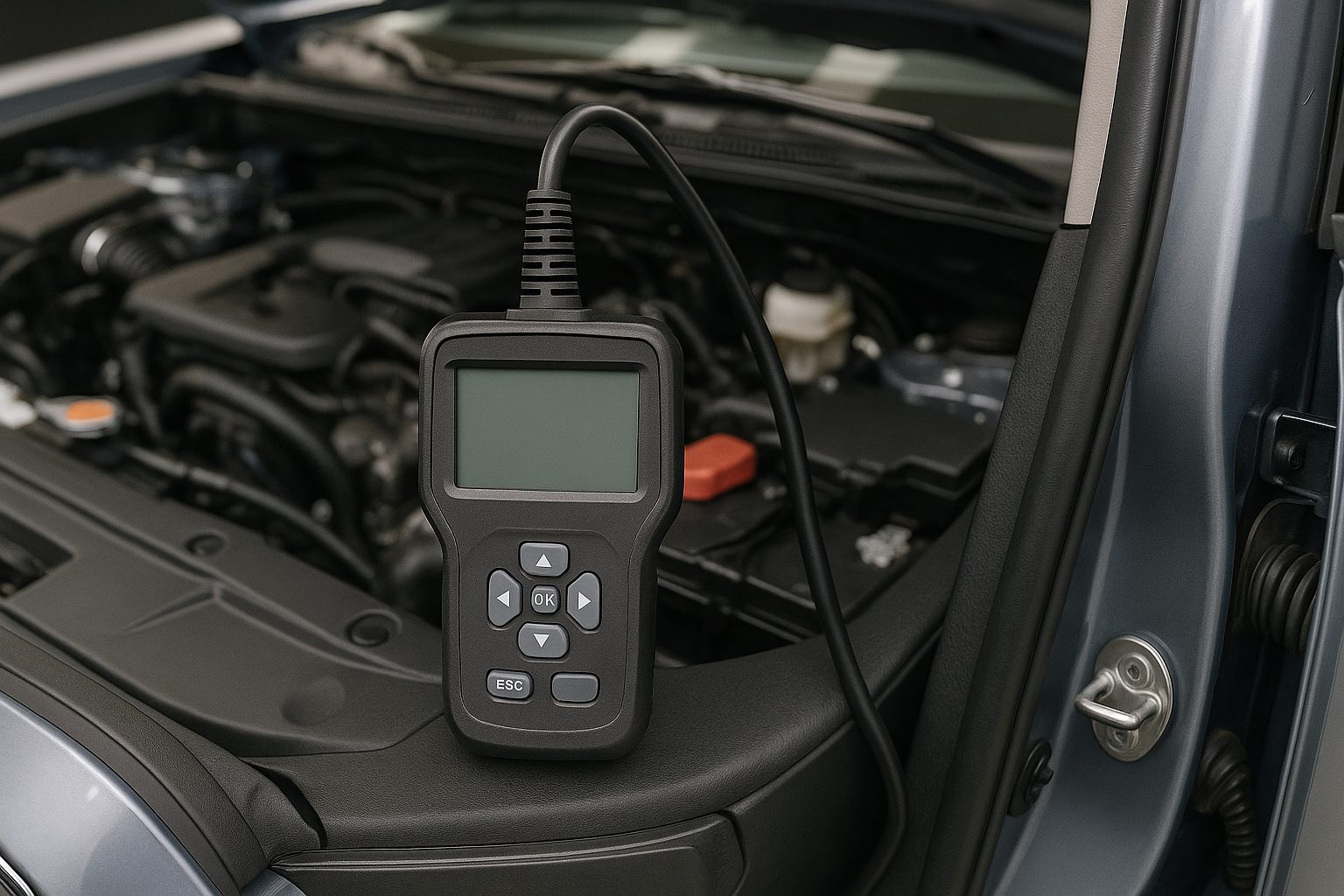
A mechanic can read these codes with a diagnostic scan tool in minutes — it plugs into your OBD-II port (typically under the dash) and pulls the stored codes, giving a starting point for diagnosis.
Steady Light vs. Flashing Light
This distinction matters. A steady check engine light means a fault has been detected but the vehicle is still driveable. It warrants attention soon, but you don't necessarily need to pull over immediately. A flashing or blinking check engine light is more serious — it typically indicates an engine misfire severe enough to damage the catalytic converter. If your check engine light is flashing, reduce speed and get to a shop as soon as safely possible.
Common Causes
Loose or Faulty Gas Cap
One of the most common and harmless causes. Your fuel system is designed to be sealed, and a loose or damaged gas cap breaks that seal, triggering an evaporative emission fault. If you recently fuelled up and the light came on, try tightening the cap fully — you may need to drive a short distance for the system to clear the code.
Oxygen Sensor Failure
Oxygen sensors monitor the exhaust gases to help the engine management system optimize the air-fuel mixture. A failing O2 sensor won't immediately disable your vehicle, but it can reduce fuel economy by 10–40% and eventually damage the catalytic converter if left unaddressed.
Catalytic Converter Issues
The catalytic converter reduces harmful exhaust emissions. When it starts failing, fuel economy drops and emissions increase. A catalytic converter failure is often downstream of another problem (like a failing oxygen sensor or oil burning), so diagnosing the root cause is important.
Mass Airflow Sensor
The MAF sensor measures the amount of air entering the engine. A dirty or failing MAF sensor causes rough idling, poor acceleration, and reduced fuel economy.
Ignition System — Spark Plugs or Coil Packs
Worn spark plugs or a failing ignition coil causes engine misfires. This often feels like a rough idle, hesitation on acceleration, or a slight shudder. Modern vehicles can run on fewer cylinders temporarily, but continued misfiring causes additional engine wear and catalytic converter damage.
Don't rely on code readers from the parts store alone. Reading the code tells you which system triggered the fault — not necessarily the exact component or root cause. Proper diagnosis involves testing sensors and components, not just clearing codes and hoping it goes away.
What You Should Do
Don't ignore a check engine light, even if the car seems to drive fine. Most faults get worse and more expensive over time, and some can cause secondary damage to other components. Book a diagnostic scan at a shop — the scan itself takes minutes and gives you and the technician a clear starting point. From there, you'll understand exactly what's involved and can make an informed decision.
At CRU-Tech, we offer full diagnostic scanning and mechanical services. If your check engine light is on, bring it in and we'll get to the bottom of it.
Ready to Book an Appointment?
Our team at CRU-Tech Auto is here to help. Give us a call or send us a message.