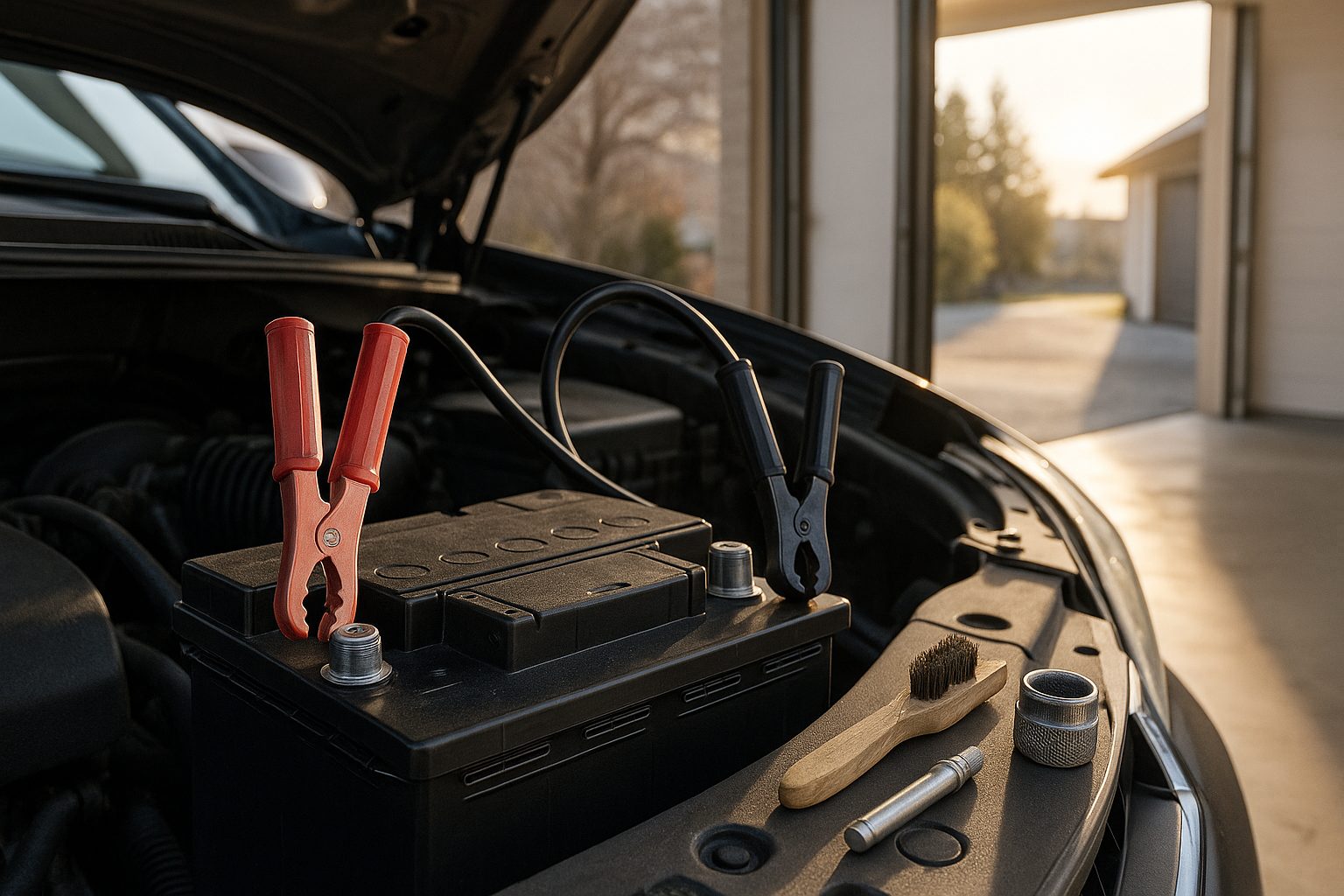
Your car battery takes a beating every Kamloops winter. Cold temperatures reduce a battery's ability to deliver current — at -18°C, a battery can lose up to 50% of its cranking power. Many batteries that barely made it through winter will fail completely once spring brings warmer temperatures and increased electrical demand. Here's what you need to know.
Why Winter Is So Hard on Batteries
Car batteries work through a chemical reaction between lead plates and sulfuric acid electrolyte. Cold temperatures slow this reaction down significantly — the colder it gets, the harder it is for the battery to generate the power needed to start a cold engine. At the same time, cold engines require more current to turn over than warm ones, so demand is high exactly when supply is lowest.
Every cold start that's slow or sluggish is a sign your battery is working near its limit. Over a full winter of repeated deep discharges and difficult starts, battery plates degrade and capacity drops permanently.
Why Batteries Often Fail in Spring
Counterintuitively, many batteries that survive winter fail in spring. Here's why: a weakened battery that's been operating in cold temperatures may seem okay because the cold masks the problem — everything feels sluggish in winter. Once temperatures rise, the engine starts more easily, but the battery is now asked to power air conditioning, more accessories, and longer trips. The increased demand exposes the weakness, and the battery that limped through winter dies on a warm April morning.
Rule of thumb: If your battery is three years or older and hasn't been tested recently, spring is the time to have it load-tested — not when it fails and leaves you stranded.
Warning Signs of a Weakening Battery
- Slow or sluggish cranking — The engine turns over slowly before starting, especially on cold mornings.
- Clicking sound when starting — A rapid click or single heavy click often means there's not enough current to engage the starter.
- Dimming headlights — Lights that dim noticeably at idle or when you use other accessories suggest the battery can't keep up.
- Battery warning light — An illuminated battery light indicates a charging system issue — could be the battery, alternator, or both.
- Swollen battery case — Heat causes batteries to swell. A bloated battery is at the end of its life and should be replaced immediately.
- Frequent need to jump-start — If you've needed a jump more than once in the past few months, the battery is failing.
How Battery Testing Works
A load test is the most accurate way to assess a battery's health. Unlike a simple voltage test (which only tells you if the battery is charged), a load test simulates the demand of engine starting while measuring how well the battery maintains voltage under that load. A healthy battery holds above 9.6V under load; anything below that indicates significant capacity loss.
At CRU-Tech, we can test your battery in minutes. If it's healthy, great — you're good to go. If it's marginal or failing, we'll show you the numbers and give you the choice to replace it before it leaves you stranded.
How Long Should a Battery Last?
In BC's climate, most car batteries last 3–5 years. Vehicles that do a lot of short trips (where the alternator doesn't have time to fully recharge the battery after each start) tend to wear batteries out faster. Vehicles with higher electrical loads — heated seats, large infotainment systems, multiple USB chargers running constantly — also see shorter battery life.
If your battery is approaching or past the 3-year mark, have it tested as part of your spring service — even if it seems fine. The cost of a battery test is nothing compared to the inconvenience of a failed start.
Choosing the Right Replacement Battery
Not all batteries are the same. When replacing, match or exceed the Cold Cranking Amps (CCA) rating specified for your vehicle. In Kamloops' climate, going slightly above the minimum CCA rating is a smart investment — more cranking power means easier cold starts and longer battery life. Our team will make sure you get the right battery for your vehicle's make, model, and electrical demands.
Ready to Book an Appointment?
Our team at CRU-Tech Auto is here to help. Give us a call or send us a message.