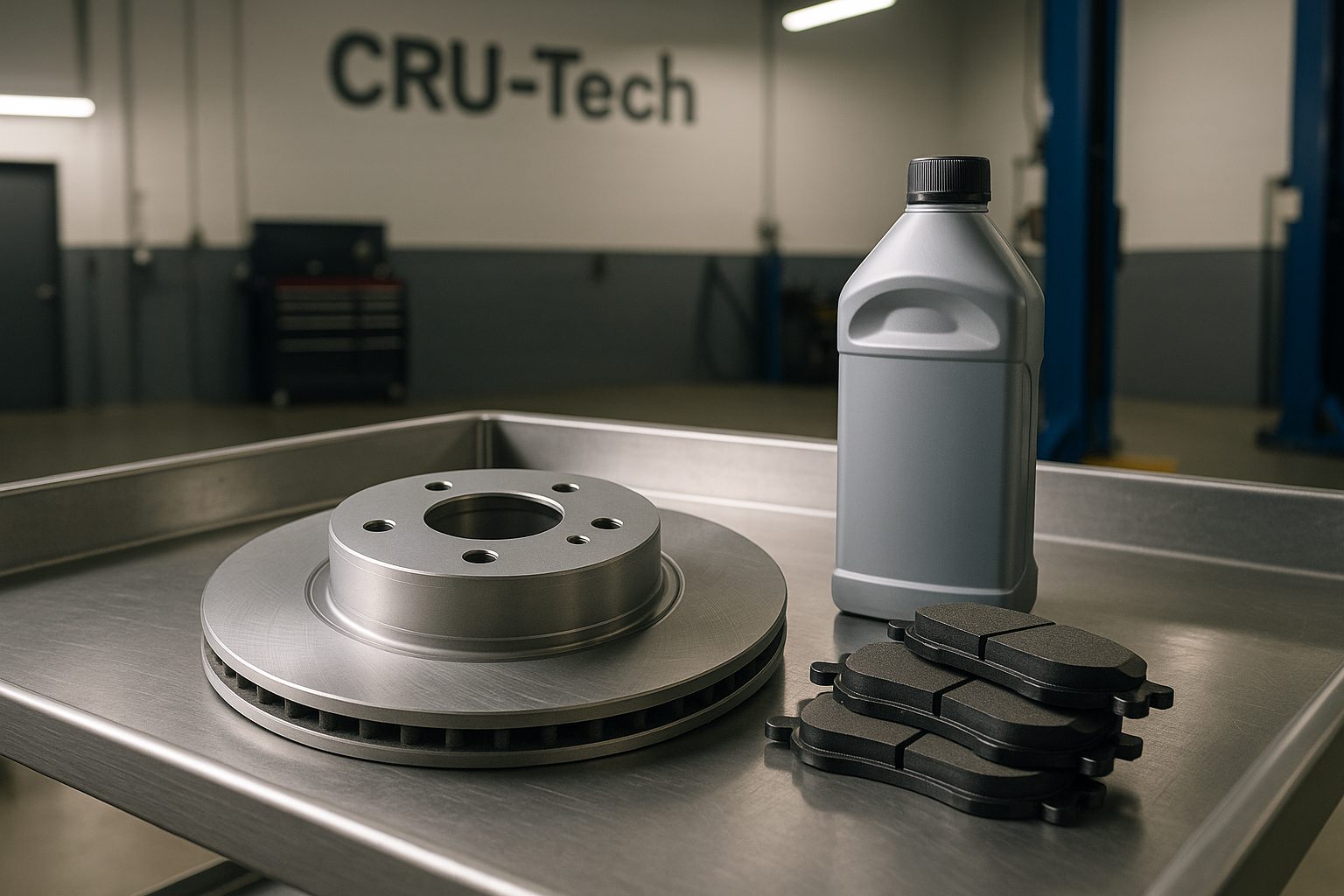
Of all the maintenance items on your vehicle, brakes are the one you absolutely cannot put off. The good news is your vehicle will usually give you clear warning signs before brake problems become critical — if you know what to look and listen for. Here's what to watch out for.
Squealing or Squeaking
A high-pitched squeal when you apply the brakes is often the first sign your brake pads are wearing low. Most brake pads have a small metal indicator built into them specifically to produce this sound when the pad material gets thin. It's an early warning — you likely still have some time, but you should book an inspection soon. Don't ignore this sound hoping it'll go away.
Note: Some squealing right after the vehicle sits overnight or in damp conditions can be normal. It's the persistent squealing during normal braking that warrants attention.
Grinding or Metal-on-Metal Sound
If the squealing has progressed to a grinding, growling noise, your brake pads are likely worn through to the metal backing plate. At this point, the metal is grinding directly against your rotor surface. This causes rapid rotor damage (rotors are expensive) and dramatically reduced braking ability. This needs immediate attention — don't drive on grinding brakes.
Vibration or Pulsing When Braking
If your brake pedal pulsates or you feel vibration through the steering wheel when braking, your rotors are likely warped or unevenly worn. Warped rotors reduce the consistent contact between pad and rotor that safe braking requires. This can happen from heat cycling, aggressive driving, or applying brakes to hot rotors after hard use (like descending a mountain).
Tip: If you regularly drive the Coquihalla or Trans-Canada through mountain passes, be especially attentive to rotor health — steep descents with heavy braking accelerate warping significantly.
Pulling to One Side When Braking
If your vehicle pulls noticeably to the left or right when you apply the brakes, one brake caliper may be sticking or seized. This uneven braking force causes the pull. A seized caliper doesn't just affect braking — it can cause uneven tire wear and reduced fuel economy because the caliper may be applying light pressure even when you're not braking.
Soft or Spongy Brake Pedal
A properly functioning brake pedal should feel firm and engage within the first inch or two of travel. If your pedal feels soft, spongy, or goes closer to the floor than usual, there may be air in the brake lines or a leak in the brake fluid system. This is a serious safety issue and should be inspected immediately.
Brake Warning Light
Most modern vehicles have a brake system warning light on the dashboard. If it illuminates, it could indicate low brake fluid, a pressure imbalance, or a problem with the anti-lock braking system (ABS). Don't dismiss it — have it diagnosed promptly.
How Often Should Brakes Be Inspected?
As a general guideline, have your brakes inspected every 20,000–25,000 km, or at every other tire rotation. Brake life varies significantly depending on driving style and conditions — city driving with frequent stops wears brakes much faster than highway driving. Kamloops' hilly terrain also puts more demand on brakes than flat terrain.
If you've noticed any of these signs, bring your vehicle into CRU-Tech. We'll inspect your full brake system — pads, rotors, calipers, lines, and fluid — and give you an honest assessment of what needs attention.
Ready to Book an Appointment?
Our team at CRU-Tech Auto is here to help. Give us a call or send us a message.