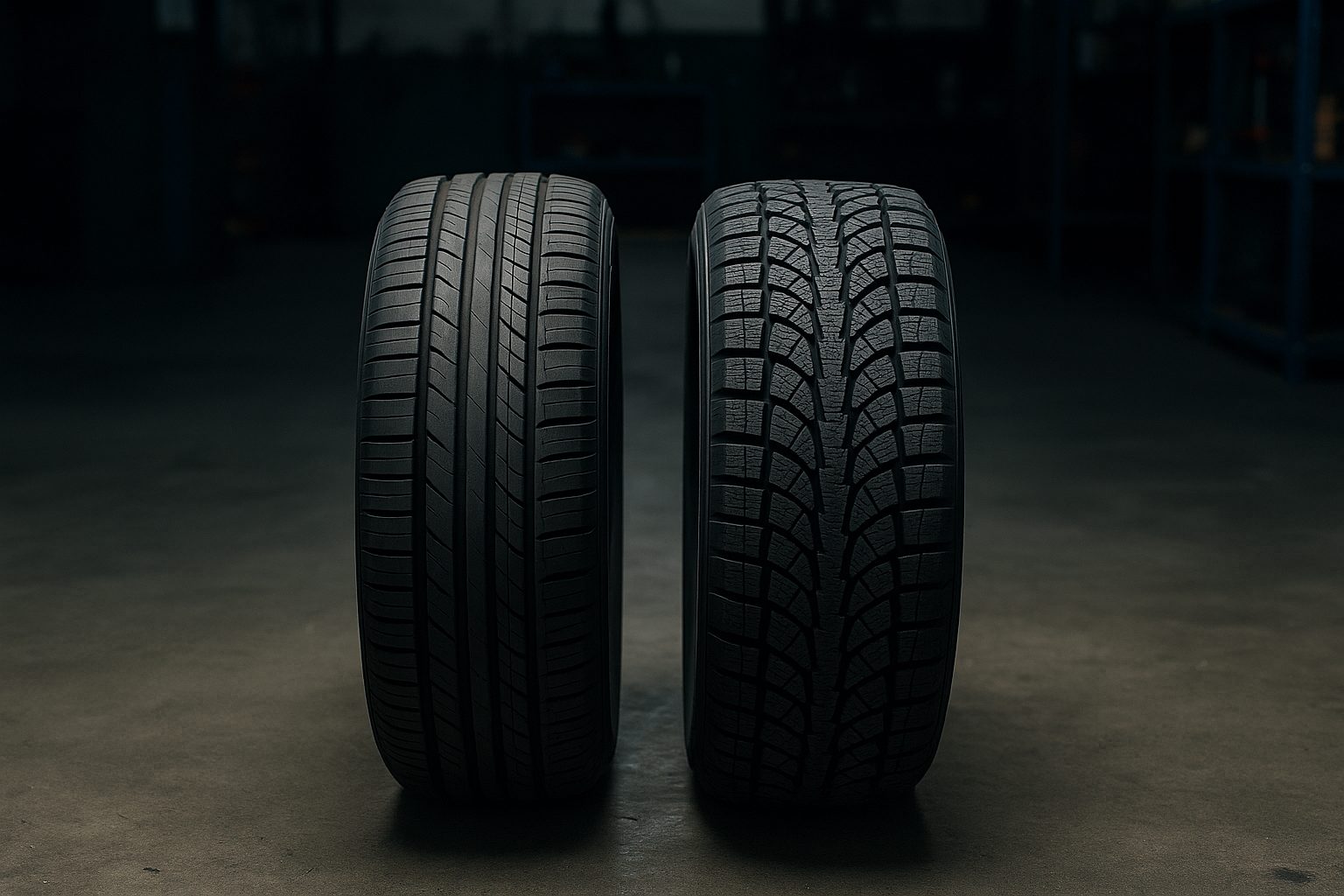
It's one of the most common questions we get at CRU-Tech: "My car already has all-season tires — do I really need winter tires for Kamloops?" The short answer is yes. The longer answer explains why — and it comes down to temperature, rubber chemistry, and where you actually drive.
What "All-Season" Actually Means
All-season tires are designed to handle a wide range of conditions: dry roads, wet roads, and light snow. They're a compromise — decent in every condition, but not exceptional in any. The key limitation is temperature: all-season rubber compounds are optimized for performance above 7°C. Once temperatures drop below that, the rubber begins to harden, which reduces grip and braking performance regardless of the tread pattern.
Winter Tires: Built for Cold
True winter tires (marked with the three-peak mountain snowflake symbol) use a softer rubber compound that stays pliable in cold temperatures. They also feature deeper tread depths, more sipes (tiny slits in the tread blocks), and specialized tread patterns designed to channel away snow, slush, and water while maintaining contact with the road surface.
The numbers: In tests, winter tires can reduce stopping distance on ice by up to 30–40% compared to all-season tires. At 50 km/h on ice, that's a meaningful difference in whether you stop in time.
BC's Legal Requirement
In British Columbia, winter tires are legally required on designated highways (including the Coquihalla and other mountain routes) between October 1 and April 30. If you travel out of Kamloops for work or recreation, you're likely on a route that requires them. Fines for non-compliance can reach $109 — and that's before you factor in what happens if you're involved in an accident with inadequate tires.
All-Season vs Winter: A Side-by-Side
- Temperature range: All-season: best above 7°C. Winter: best below 7°C.
- Ice performance: Winter tires significantly outperform all-seasons on ice.
- Snow traction: Winter tires grip and evacuate snow much better.
- Wet roads (cold): Winter tires maintain flexibility; all-seasons harden.
- Summer wear: Winter tires wear faster in heat — swap them out in spring.
- Cost: All-seasons are one purchase; winter tires require a second set but extend the life of your summer/all-season set.
What About All-Weather Tires?
All-weather tires (not to be confused with all-season) are a newer category. They carry the mountain snowflake symbol and are designed to perform in cold temperatures while being suitable year-round. They're a solid option if you don't want to manage two sets of tires — but they still don't match a dedicated winter tire's performance in severe cold or heavy snow.
Our Recommendation for Kamloops
Given Kamloops' temperature swings and the mountain driving many residents do regularly, we consistently recommend a dedicated set of winter tires mounted on a second set of rims. It's a one-time investment that pays off in safety every year — and swapping rims is faster than swapping tires, keeping your service time short each season.
We carry a wide range of winter and all-season tires at CRU-Tech and can help you find the right fit for your vehicle and budget. Book a tire consultation with our team today.
Ready to Book an Appointment?
Our team at CRU-Tech Auto is here to help. Give us a call or send us a message.